


Báo Bình Dương điện tử - www.baobinhduong.vn
Tổng Biên tập: LÊ MINH TÙNG
Phó Tổng Biên tập: HUỲNH MINH DÂN - NGUYỄN QUỐC LIÊM


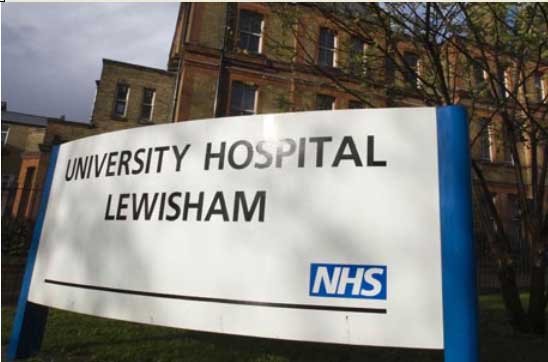
A sign stands outside a building at Lewisham hospital in south
London November 29, 2009. (Xinhua/Reuters File Photo)
The new British coalition government confirmed that it planned to shake-up England's National Health Service (NHS), in a series of changes hailed as the biggest in 60 years.
Health Secretary Andrew Lansley published a government white paper on Monday detailing the extensive changes, which will see family doctors handling budgets totaling 80 billion pounds (about 120 billion U.S. dollars).
Under the reforms doctors will deal directly with hospitals. They will choose which treatments are necessary for patients and also choose which hospitals they go to, and they will then pay for those treatments from their budgets.
The NHS is a free, comprehensive health service for all British citizens, funded from a tax paid by workers and employers. The 80 billion pounds the doctors will handle in future represents a huge chunk of the NHS's annual 100 billion pound (about 150 billion U. S. dollars) budget.
At the moment the government gives money to primary care trusts (PCTs) which then pay hospitals and other providers for health care services.
The move will see the scrapping of 150 primary care trusts and strategic health authorities, which cover a range of NHS trusts and supervise local NHS services.
Putting doctors in charge of budgets could cost the jobs of tens of thousands of administrative workers in the PCTs.
Under the reforms, doctors, also known as general practitioners (GPs), will be encouraged to form groups to pay for and administer services. They are likely to recruit experts to help them do the job, possibly from those who lose their jobs with PCTs.
The plan is to form about 500 groups, covering about 8,000 doctors' practices. The reform would only affect health care in England, not in Scotland, Wales or Northern Ireland.
The scheme will be compulsory. A similar scheme over 13 years ago foundered when few doctors were willing to shoulder the extra management responsibilities necessary.
Patients will have more choice over how and where they are treated, and will get control over their care records.
They will be able to compare hospital performance and doctor performance from online records, which it is hoped will usher in a more competitive attitude in the NHS through giving patients power to choose which doctors they have and which hospitals they go to.
An independent NHS Commissioning Board will be set up to oversee the doctors' handling of budgets.
Health Secretary Lansley said "the NHS is a priority for reform. Investment has not been matched by reform. So we will reform the NHS to use those resources far more effectively for the benefit of patients.
"The government's ambition is for health outcomes, and quality services, that are among the best in the world. We have in our sights a unique combination of equity and excellence.
"With patients empowered to share in decisions about their care, with professionals free to tailor services around their patients, and with a relentless focus on continuously improving results, I am confident that together we can deliver the efficiency and the improvement in quality that is required to make the NHS a truly world-class service."
Nigel Edwards, the acting head of the NHS Confederation, which represents nearly all health care organizations, broadly welcomed the white paper but warned, "The transition of commissioning functions to GPs will require careful management to ensure that the handover of responsibility is smooth and patient care is not affected.
"Against the backdrop of these reforms there is still a need for all NHS organizations to find savings of up 20 billion pounds (about 30 billion U.S. dollars) over the next five years. While the estimated 1 billion pounds (about 1.5 billion U.S. dollars) of savings from these reforms will contribute, finding the remaining 19 billion pounds (29 billion U.S. dollars) will still require difficult decisions."
British media quoted the Daily Telegraph newspaper as saying the reform represented a victory for Lansley over the Treasury, the finance ministry, whose chief, chancellor of the exchequer George Osborne, had expressed concern over giving doctors control over so much money.
The Daily Telegraph reported that Prime Minister David Cameron backed Lansley's argument.
The coalition government came to power in May facing a record public spending deficit and has embarked on the most drastic and far-reaching cuts in public spending since the Second World War.
However, it exempted health care from the need to cut its budgets. Despite this, the NHS budget is under pressure from an increasingly elderly population, from rising treatment and drug costs, and from emerging health problems such as the growing prevalence of obesity.
Any savings it can make will be redeployed in other areas of NHS health care where there is strong demand.
Lansley's white paper also spells the end for England's 10 strategic health authorities (SHA), which are responsible for overseeing local health care.
Running costs annually for the SHAs and the PCTs are about 1.6 billion pounds (about 2.4 billion U.S. dollars) and even though front line health care services are protected from the government budget cuts, administrative costs are not and the government aims to cut management by about 30 percent.
The government expects to make savings of 45 percent in administrative costs by implementing the changes in the white paper.
The white paper drew strong opposition from trades unions.
Karen Jennings, head of health at the trade union Unison, said "Far from liberating the NHS, these proposals will tie it up in knots for years to come. They are a recipe for more privatization and less stability.
People in fear for their jobs, or how they are going to be able to deliver services, will not be able to make informed or rational decisions. This is no way to take patients or staff with you.
Xinhua